What is happening in my business right now
See what is moving, changing, waiting and coming up. Understand the open work across relationships without rebuilding every story yourself.
Product
Know where things stand without rebuilding the story.
Current turns the conversations and activity already happening in your business into a maintained understanding of what is happening now: what was promised, who is waiting, what changed and what needs attention.
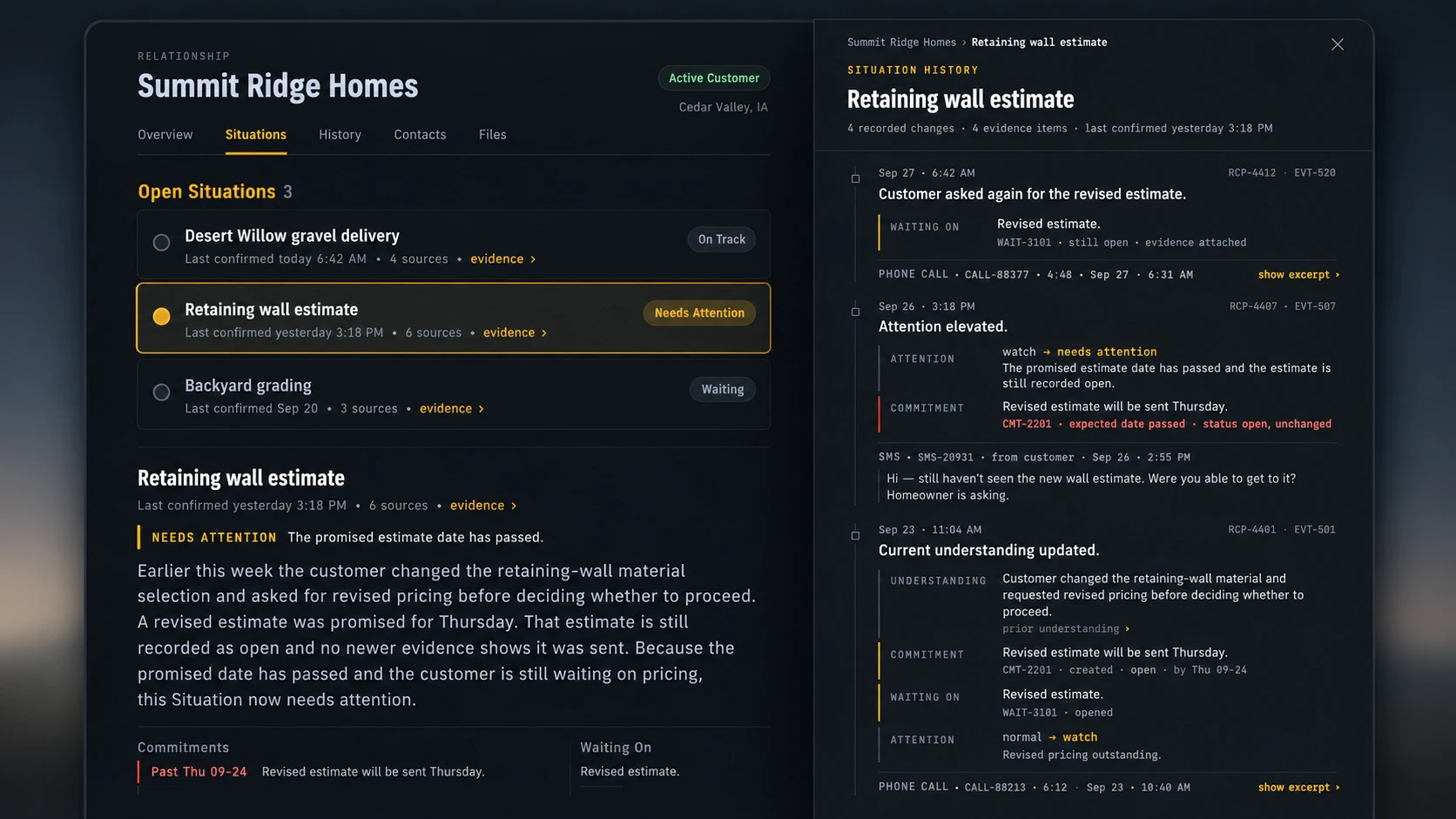
Start with the picture Current maintains from your connected evidence sources. Open the history when you need to understand how things got here.
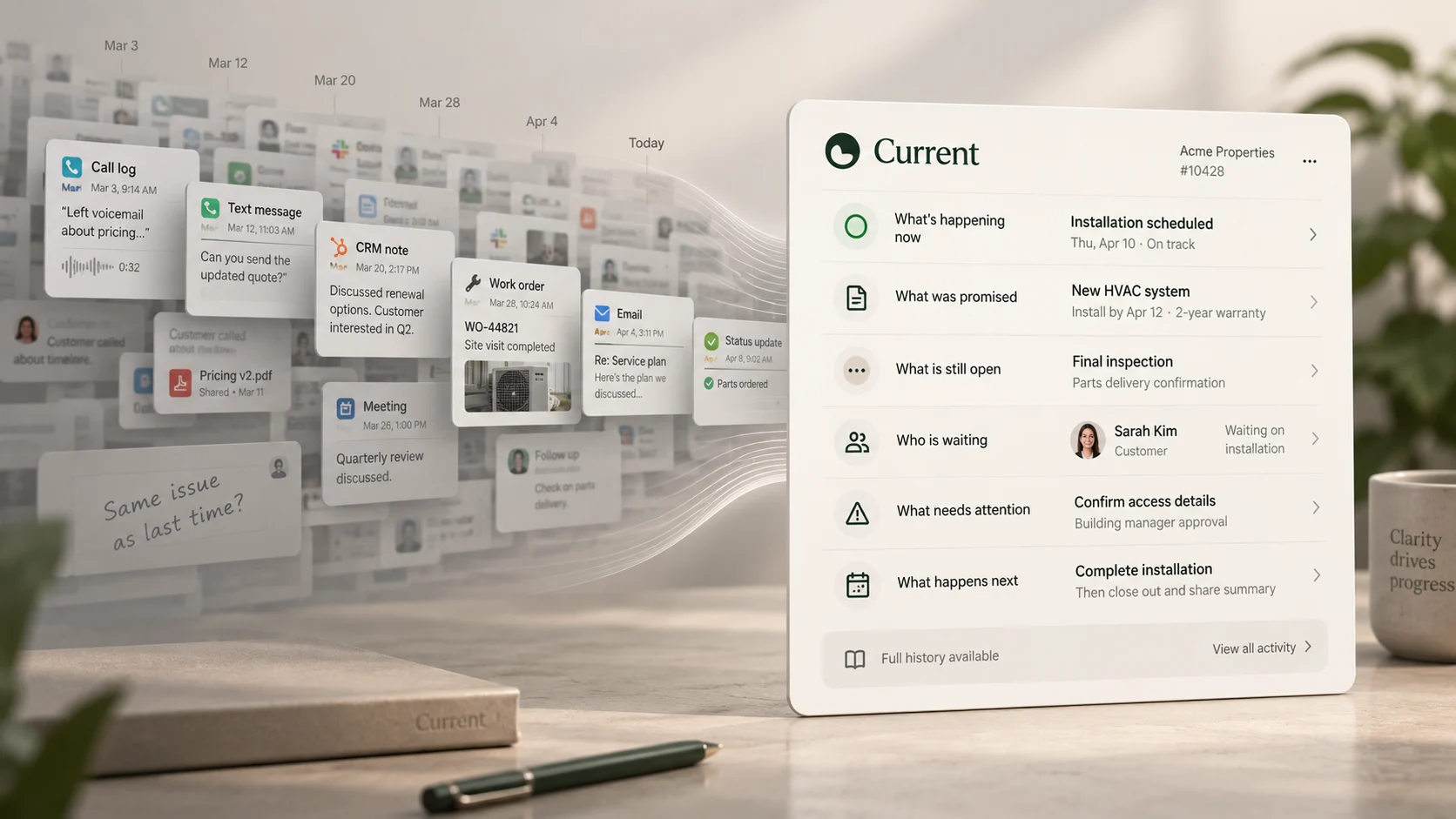
Your business already has the information. Getting the answer still takes work.
A customer calls. Someone sends a text. An estimate changes. Another employee promises an update.
When you need to know where things stand, you open the records, read the conversations and piece the story together. The same reconstruction happens again when another person takes over.
Current maintains that understanding as new evidence arrives. Start with what is happening now, what remains open and who is waiting. Use the history to inspect the answer.
History becomes context instead of homework.
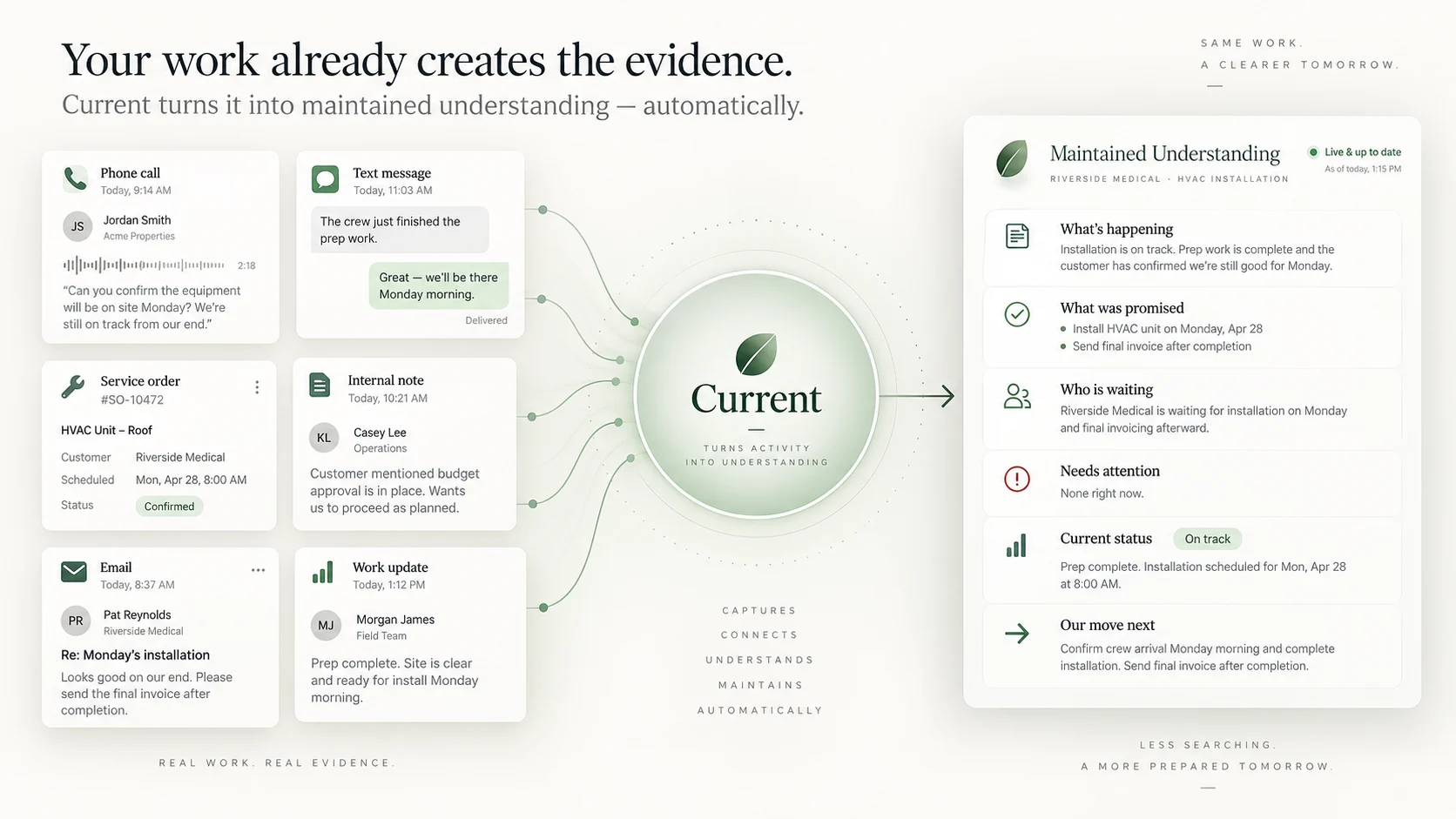
Current adds the understanding across your systems.
Your CRM manages contacts and opportunities. Your work software manages jobs and transactions. Your inbox handles conversations.
Current sits above the connected sources and maintains where things stand across them. Your implementation starts with the evidence sources available to connect and the views that matter to your team.
| Your existing systems | Current adds |
|---|---|
| Contact and customer records | Where the relationship stands |
| Orders, jobs and work records | What is happening around the work |
| Calls, messages and activity history | What changed and what remains open |
Start in Current to understand the situation. Continue the work in the software your team already uses.
Your systems hold the records. Current maintains the understanding.
See what is moving, changing, waiting and coming up. Understand the open work across relationships without rebuilding every story yourself.
See what is happening with them, what each side has promised and whose move is next. Keep separate pieces of work understandable within the same relationship.
See the relationships and Situations that deserve a closer look, along with the recorded reasons. A past expected date, an unresolved issue or a missing confirmation has context you can inspect.
Understand the business. Understand the relationship. Know where to focus.
See the business from the angle you need.
Current presents its maintained understanding through Live Business Views. Each view helps answer a different question while keeping the work connected to its context.
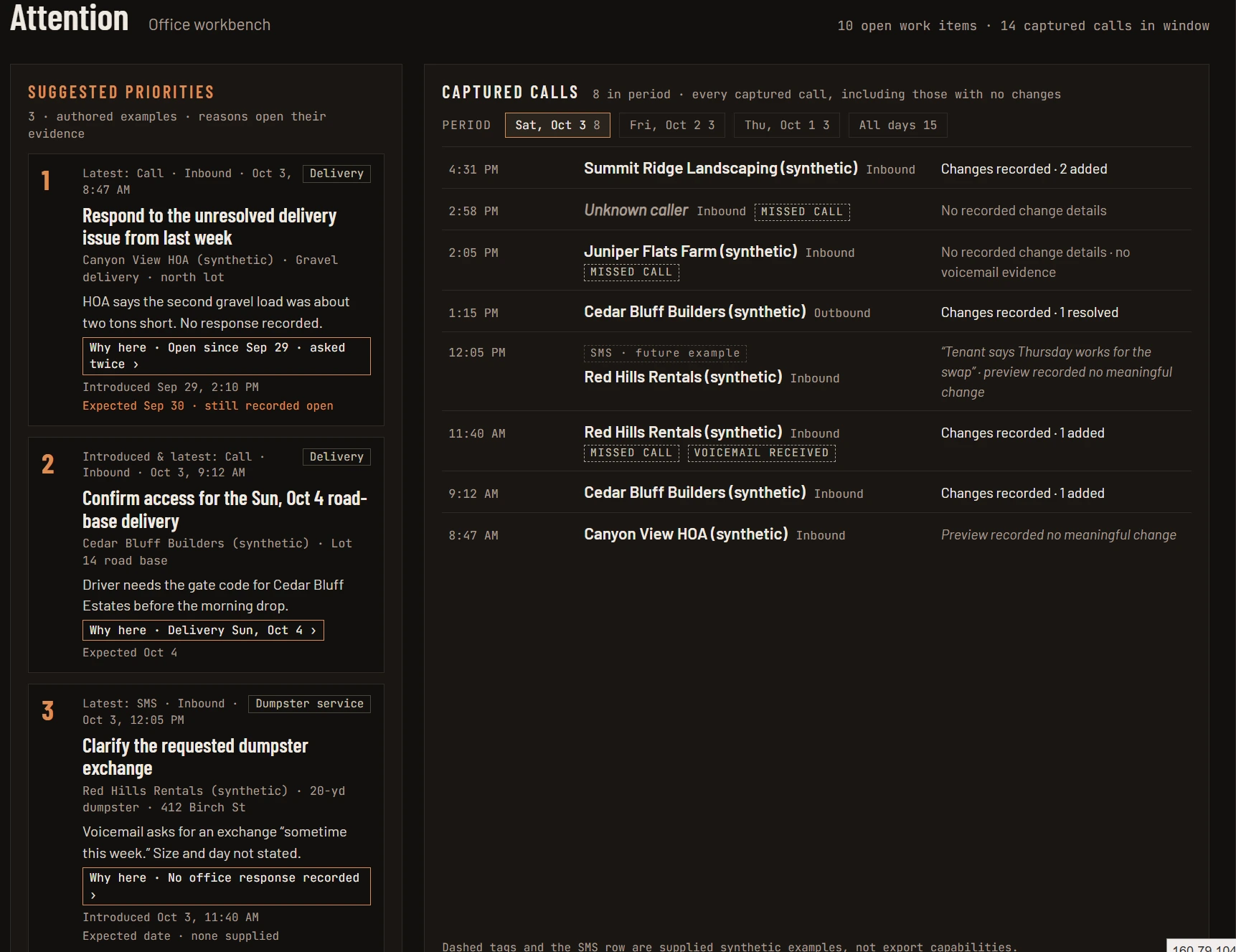
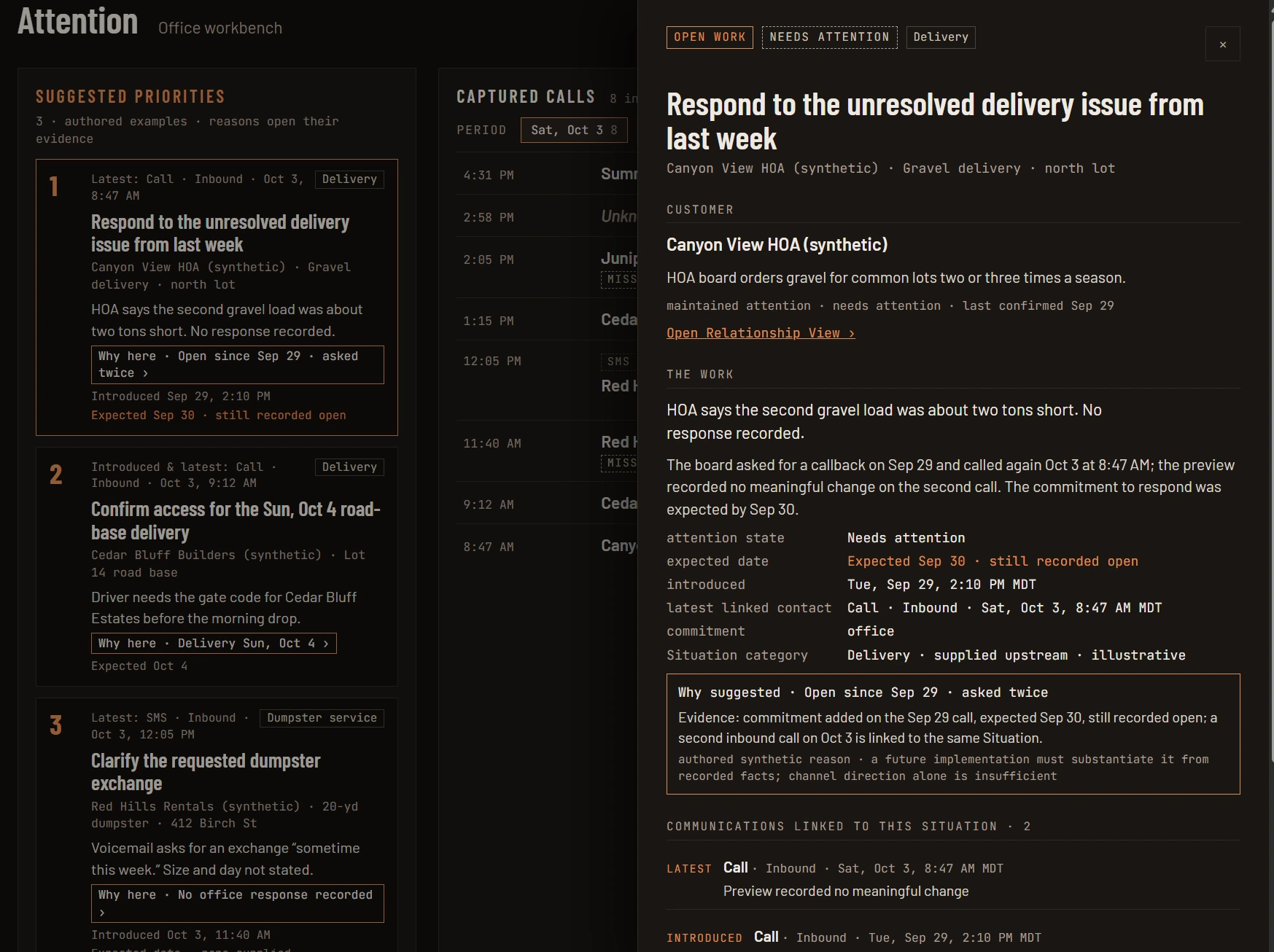
Product design previews using synthetic example data.
Where do we stand with them?
See the customer’s current context and the distinct Situations happening within the relationship. Inspect open commitments, waiting and attention without losing sight of the customer.
What is anchored in time?
See upcoming commitments and expected dates in the context of the work they belong to. Identify commitments still recorded open after their expected date has passed.
What needs me now?
Start with work that deserves awareness and the reason it surfaced. Move from the overview into the customer, the Situation and the supporting context.
The communication history remains available alongside that current picture, including calls that did not record a meaningful change.
What is happening with this piece of work?
A delivery, an estimate and a service issue can progress independently for the same customer. Inspect one operational story, its commitments and the changes behind it while keeping the broader relationship in view.
The small things should stay visible when attention moves on.
A delivery is rarely just a delivery. Someone also promised an invoice, a call before arrival or a confirmation about where the material should go.
Those details make sense during the conversation. Then the phone rings and attention moves elsewhere.
Current is built to keep those commitments visible within the work they belong to, so the next person can understand what is still owed.
Material delivery
Recorded commitments in this illustrative Situation:
The outcome stays visible. So do the details that make it happen.
The relationship keeps changing. Its context should stay useful.
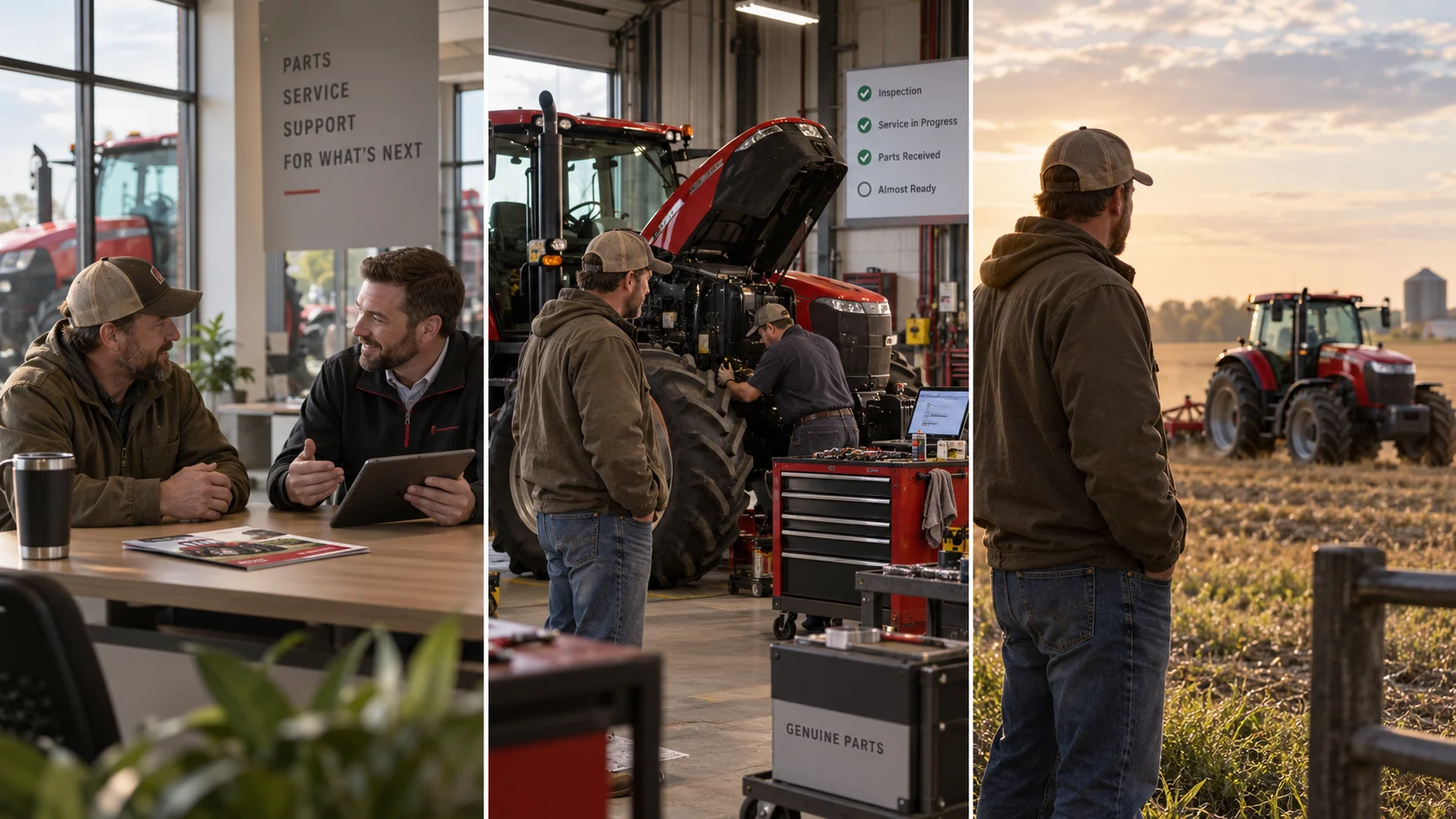
Know what someone is waiting for.
An opportunity may depend on a decision, a document or a future date. Keep the reason and any recorded follow-up timing visible so the next conversation starts with context.
Keep the promises around the work in view.
Understand what remains open, who is waiting and what changed as the job progresses. Help the team pick up the thread when another person takes over.
Keep useful history within reach.
When later evidence brings the relationship back into focus, earlier work still provides context. The next conversation can start with what happened and what mattered.
One relationship can carry many pieces of work over time.
Current can show you why.
Start with the current understanding. Inspect the recorded changes and supporting evidence when you need more context.
See when a commitment appeared, what timing was recorded and what later evidence supported a change. Keep what a call recorded then distinct from the work still recorded open now.
An expected date passing does not, by itself, prove whether the work happened. If there is no recorded confirmation, that uncertainty stays visible.
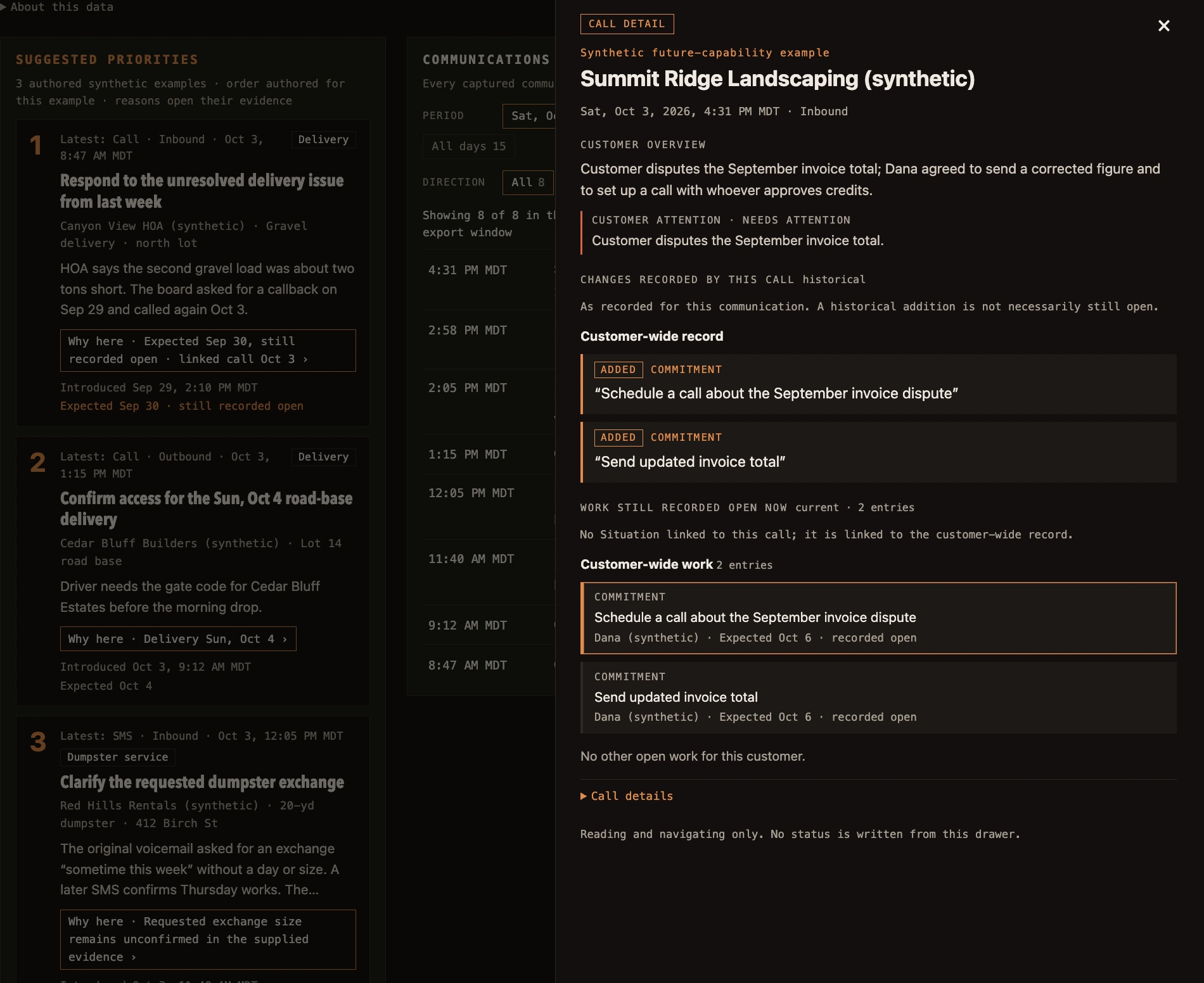
Current updates the record when the evidence supports a change and leaves it alone when it doesn’t.
You should not have to rebuild the business picture after every conversation.
Someone talks to the customer, makes a promise and moves on to the next thing. Keeping the software useful often means a second round of work: writing notes, updating fields and remembering to create or close tasks.
Current uses evidence from connected business activity to maintain its own understanding as things change. That gives the team shared context without asking everyone to reconstruct the same story.
Rocky Ridge’s initial pilot used call transcripts to maintain customer context, without asking the team to re-enter those conversations as notes or tasks.
Your team does the work. Current maintains the understanding.
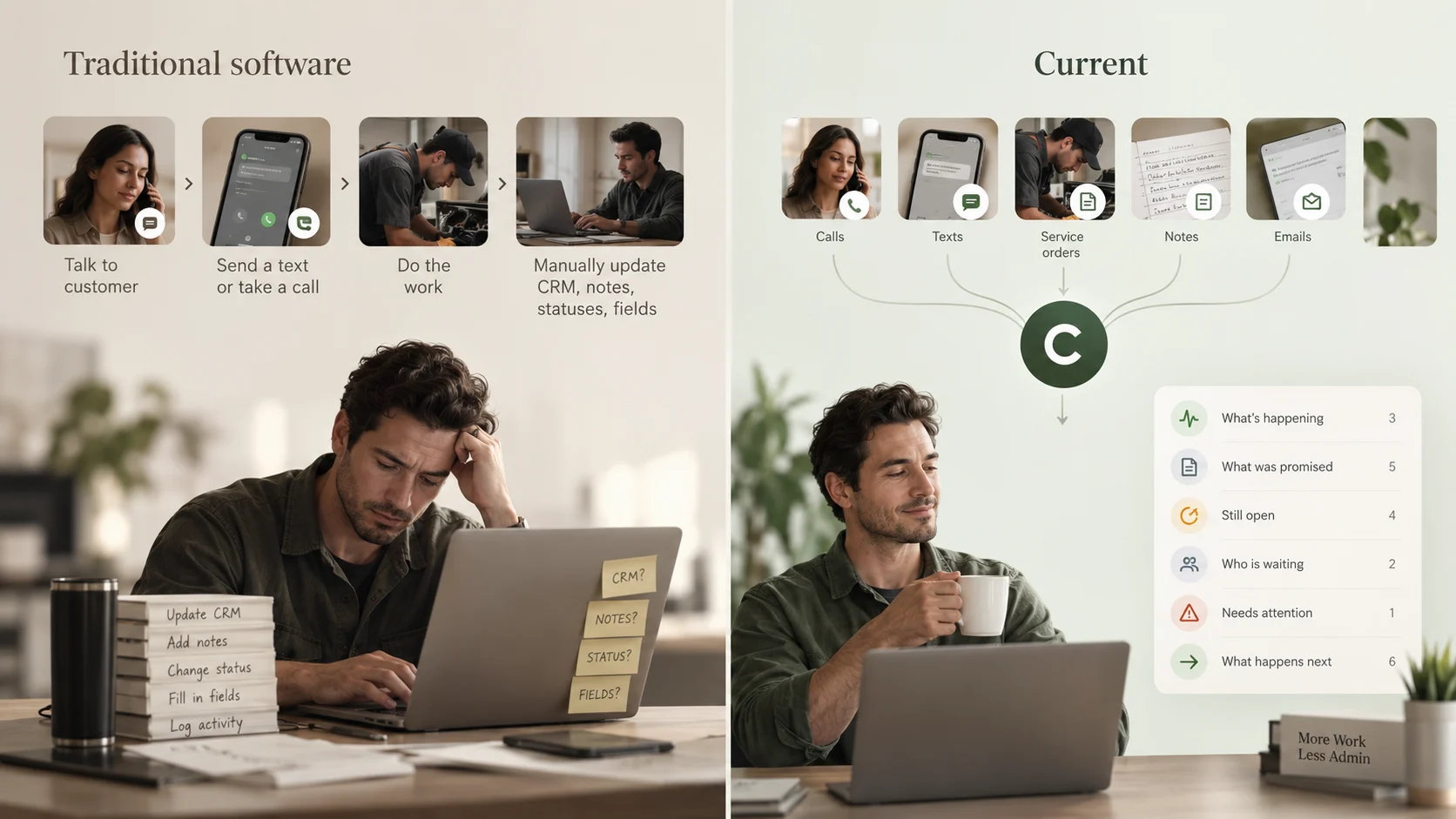
Give your team a shared place to see where things stand.
The conversations are happening. The records exist. Current adds the layer that keeps their meaning current.
See how Current can work with your business, starting with the evidence you already have and the questions your team needs answered.
Your systems hold the records. Current keeps the picture current.